Process
From request to return to service
Most coating failures are decided before the first coat goes down. The process is built to find problems early and put decisions in writing.
The stages
Request
The online form collects the ZIP code, space type, floor area, condition, system interest and timing. Photos or a share link are optional; if you have them, close-ups of the worst areas are especially useful.
First reply
We review the details and photos, ask any follow-up questions, and say whether a site assessment is worthwhile. A project outside our scope gets a plain no.
Site assessment
Measurements, moisture testing, inspection of joints, cracks, drains and existing coatings, and, where adhesion is in doubt, a test area.
Written proposal
System and products, preparation method, thickness, repairs included, cove and joint details, schedule, cure times, and what is excluded.
Preparation of the space
Your team clears the area, arranges equipment moves and confirms access. We confirm temperature, ventilation and any building rules.
Installation
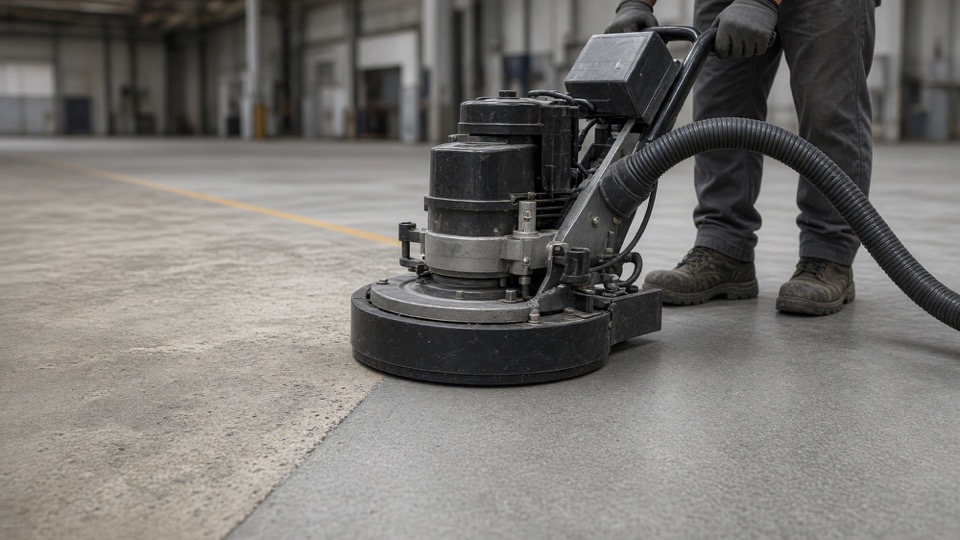
Surface preparation with dust control, repairs, then each coat applied within the product’s temperature and recoat limits.
Cure and handover
Stated times for foot traffic, light traffic, vehicles and chemical exposure. Care and cleaning guidance is part of the handover.
The work, up close
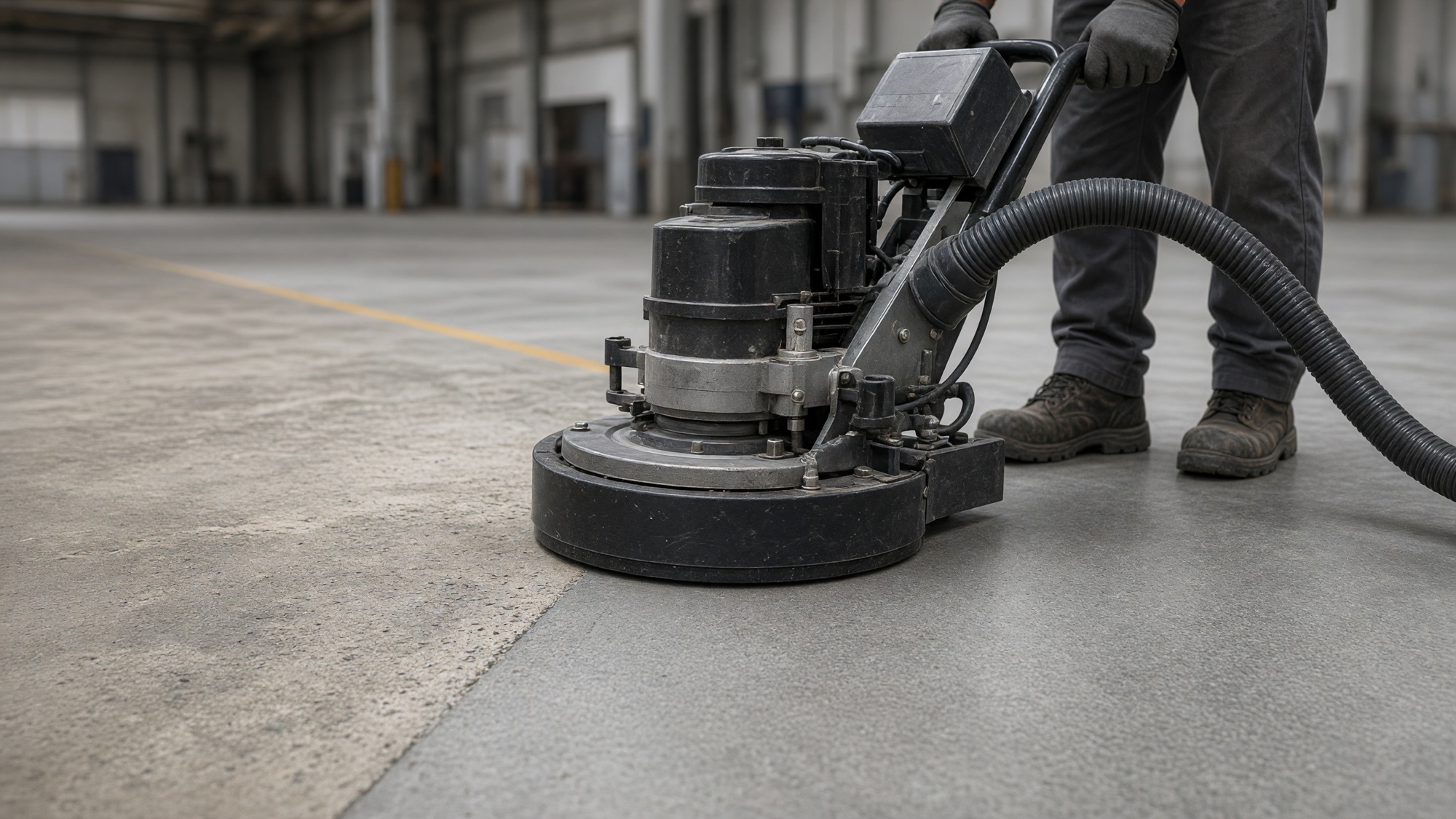
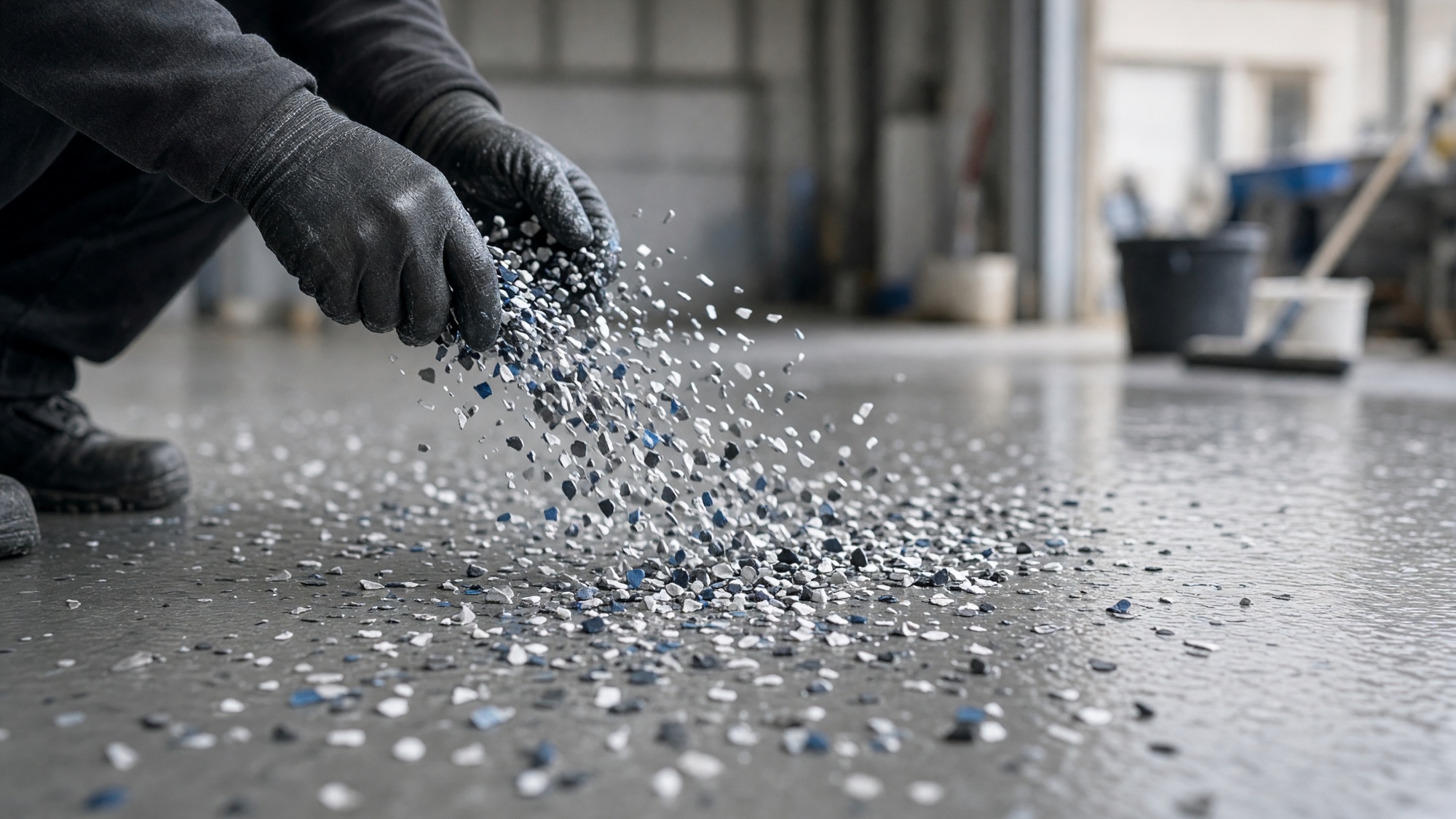
Art-directed process visualizations — not customer project documentation
What helps from your side
- Any existing specification, drawings or previous coating information.
- How long each area can close, and whether the building runs nights or weekends.
- Chemicals, cleaning products and cleaning equipment used on the floor.
- Site rules: safety orientation, PPE, escort requirements, work hours.
- Who decides: owner, property manager, board or general contractor.
Questions people ask
Why is grinding necessary before coating?
Mechanical preparation removes weak surface material and creates the profile the primer needs for a physical bond.
What happens to cracks and joints?
Static cracks can be repaired; active and moving joints need a detail that allows movement. Simply hiding them under resin makes future cracking more likely.
When can the floor return to use?
Foot traffic, rolling loads, vehicles and chemical exposure have different cure windows. The proposal should state each one.
Tell us about the floor
The quote form takes a few minutes. It asks for the ZIP code, floor area and current condition. Add photos, paste a share link or send visuals later—it is your choice.