System
Urethane cement flooring
Urethane cement is a cementitious polyurethane system installed thicker than most coatings. It is chosen when heat, water and chemicals would break down a standard epoxy floor.
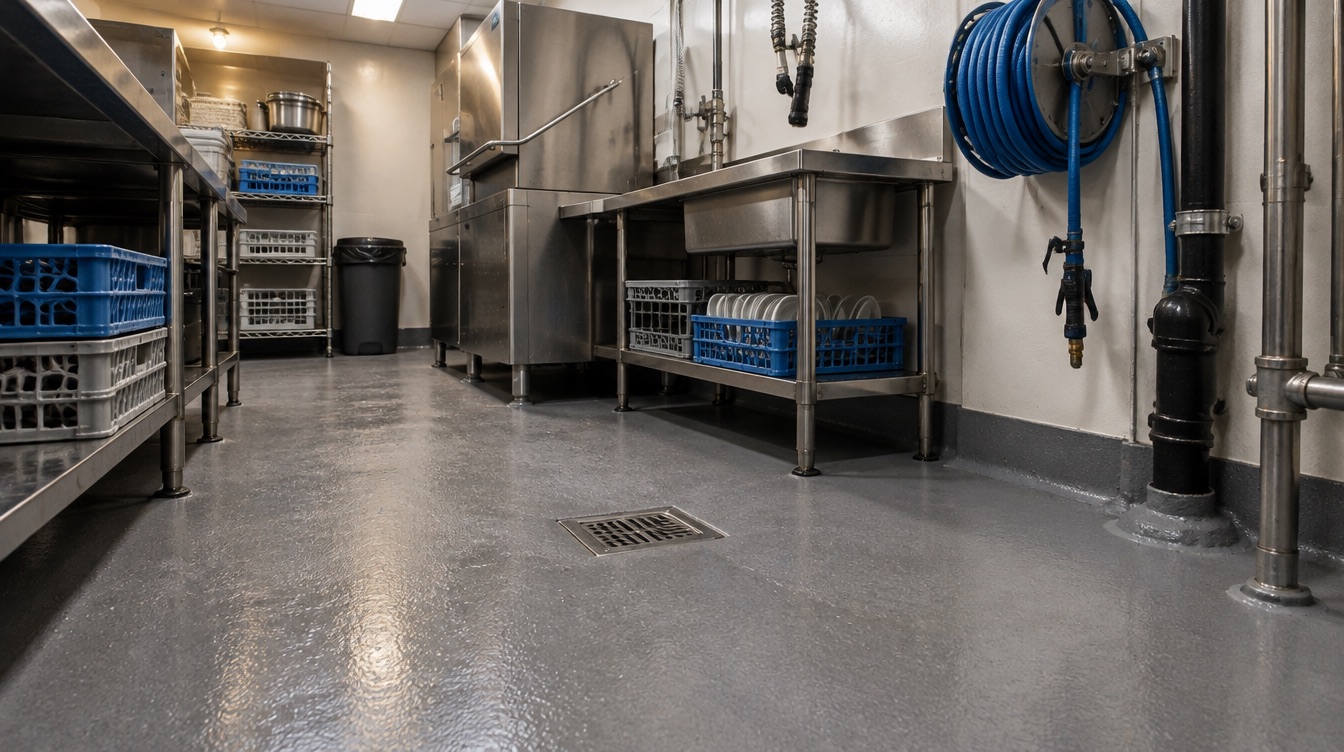
- Strength
- Thermal shock and cycling, many food acids, impact
- Thickness
- Usually built well beyond a roll-on coating, by slurry or trowel
- Trade-off
- Limited colors and a functional, textured look
Why it is specified
Thermal shock
Hot water, steam and freezer temperatures cause expansion and contraction. Urethane cement has a thermal behavior closer to concrete, so it is less likely to crack or debond under that cycling.
Moisture tolerance
Many urethane cement products tolerate higher slab moisture than standard epoxy primers. The limit is product-specific and is checked against test results; the moisture testing guide explains the methods and limits.
Chemical exposure
Good resistance to many food acids, sugars, fats and cleaners. Specific solvents and acids still need the manufacturer chart.
Installation details that matter
- Anchor grooves are cut at edges, drains and transitions so the system does not lift at terminations.
- Cove base is formed with the same material for a continuous wall-to-floor surface.
- Installation temperature limits apply; cold rooms are warmed before and during cure.
- Texture is set by broadcast media or the trowel finish and is chosen for the cleaning method.
When to choose something else
If appearance is the priority, as in a showroom or lobby, metallic epoxy or a clear-coated flake floor gives more control over color. Some urethane cement surfaces can change color under sunlight, so we discuss topcoats where floors see daylight.
Real questions people ask
Why does urethane cement cost more than paint-grade epoxy?
It is installed much thicker and needs specialized mixing, anchoring and cove details. It is selected for heat, water and impact that thinner systems may not survive.
Can it be installed in a walk-in freezer?
Only within the product temperature limits. The room may need to be warmed before installation and held at temperature through cure.
Is urethane cement waterproof?
It forms a seamless, water-resistant surface, but it is not automatically a waterproofing membrane for structural movement or occupied space below.
Related pages
Tell us about the floor
If you already know you need urethane cement, choose it in the form. Add photos or a share link if available; otherwise we can request the right views later.