Concrete condition
Cracks, old paint, oil and moisture are handled before color or flake is chosen.
Residential floors
You do not need to know coating chemistry before you call. Tell us how you use the room, what is wrong with the concrete and how you want it to look. We will explain the practical options in plain English.
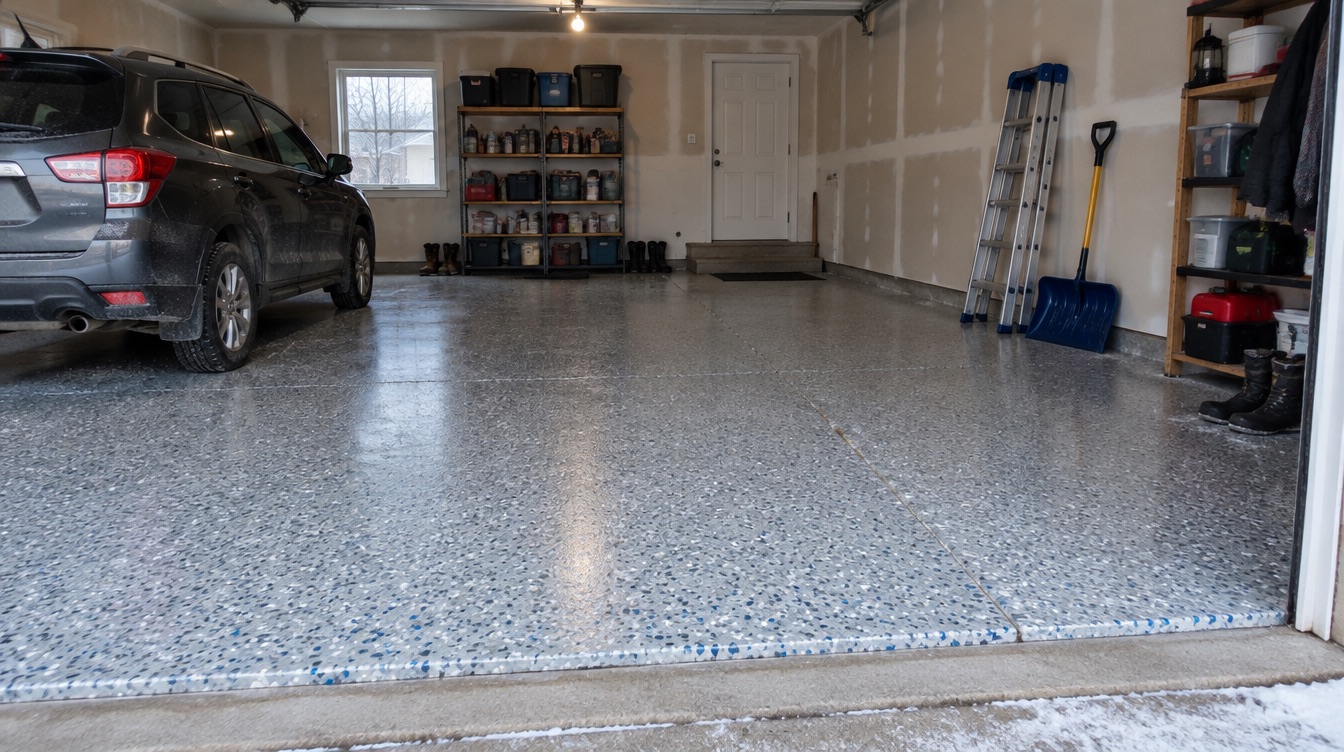
A broadcast-flake system creates a clean, durable surface for cars, storage and everyday projects. Preparation, road salt, hot tires and sunlight at the door all affect the system.
For rolling tools, benches and light mechanical work, the priorities are abrasion resistance, easy cleanup and enough texture to feel secure underfoot.
A seamless coating can brighten the room and simplify cleanup, but below-grade moisture must be checked first. Read how concrete moisture testing protects the bond. If the slab is not a good coating candidate, we will explain why.
These rooms usually need a cleanable finish with modest slip texture rather than the aggressive texture used in a commercial kitchen.
Cracks, old paint, oil and moisture are handled before color or flake is chosen.
Areas near an open garage door need a UV-stable finish that will not yellow like standard epoxy.
Parking, hobbies, storage, pets and cleaning habits change the texture and topcoat.
Share your ZIP code and approximate square-footage. Photos or a share link are helpful but optional.
We look at the existing coating, cracks, oil, moisture risk and the way sunlight reaches the room.
We explain the preparation, coating layers, texture, color direction and realistic return-to-use timing.
The floor is mechanically prepared, repaired and coated in planned stages, followed by clear instructions for cure time and care.
Some slabs have active moisture, movement or contamination that makes a coating a poor investment without additional work. Outdoor concrete also sees UV, water and freeze-thaw movement that need a different evaluation from an interior garage.
They can lift a thin or poorly bonded coating. Mechanical preparation, a compatible primer and a topcoat rated for vehicle traffic matter more than a “one-day” label.
Not responsibly without checking the moisture source. A below-grade slab may need testing, mitigation or a different finish if vapor pressure is too high.
That depends on the exact system, temperature and humidity. We separate foot-traffic time from vehicle and chemical-service time in the proposed schedule.
Choose “Residential garage” or “Something else” and add the approximate size. Upload photos, paste a share link or continue without visuals for now.