Automotive flooring
A service-bay floor built for tires, tools and fluids
Auto-service flooring needs more than a glossy finish. Lift posts, joints, drains, tire paths and repair areas all influence how the system is prepared and detailed.
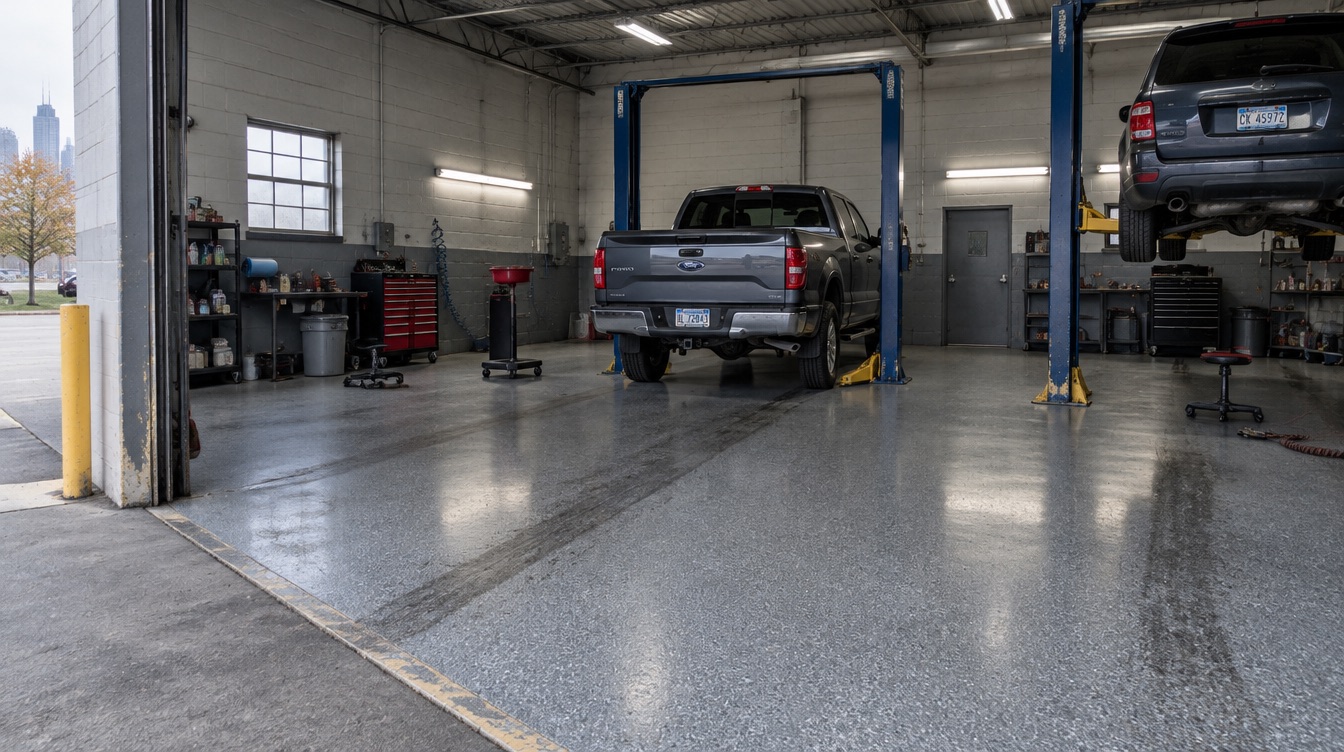
- Typical settings
- Independent repair shops, dealership bays and fleet maintenance
- Plan around
- Lift posts, drains, tire lanes, fluids and vehicle return
- Common build
- Prepared slab, repairs, broadcast system and chemical-resistant topcoat
Start with the way the bays actually work
Before quoting, identify old coatings, oil-contaminated areas, damaged concrete, lane markings, vehicle-return timing and whether the shop can close all bays at once. The topcoat should be selected with the actual service fluids and cleaning routine in mind.
Details that fail first
Lift bases and fixed equipment
Preparation access, anchors, old oil and broken concrete at each base need their own termination detail.
Joints and tire paths
Turning tires and wheeled equipment punish joint edges. Repair and joint treatment may matter more than coating low-traffic corners.
Drains and thresholds
Water, cleaners and fluids collect at low points. Sound edges and realistic slope must be addressed before coating.
Fluids and cleaners
List fuels, oils, brake fluid, coolant, degreasers and spill dwell time so resistance is checked against product data.
Keep part of the shop working when practical
Phasing can sometimes keep selected bays open, but every zone still needs safe grinding, dust containment and protected cure time. Vehicle return—not when the surface first feels dry—sets the useful reopening date.
Real questions people ask
Can the floor be coated around installed vehicle lifts?
Often it can be detailed around lift posts, but access, oil contamination and damaged concrete at each base need inspection first.
How soon can vehicles return to the bays?
Vehicle traffic normally returns later than foot traffic. The written schedule should name the exact return-to-service window for the selected system and site temperature.
Will a coated floor resist every automotive fluid?
No single topcoat resists every fluid indefinitely. Product selection should use the actual oils, fuels, coolants, cleaners, concentrations and typical spill dwell times.
Related pages
Tell us about the floor
Choose “Auto shop or service bay.” Add the number of bays, closure window, existing coating and known fluids. Photos or a share link are optional.