Service
Warehouse floor coatings
A warehouse floor is judged by its joints, its aisles and how long the dock was closed. Coating choice comes after the traffic plan, the racking layout and the schedule.
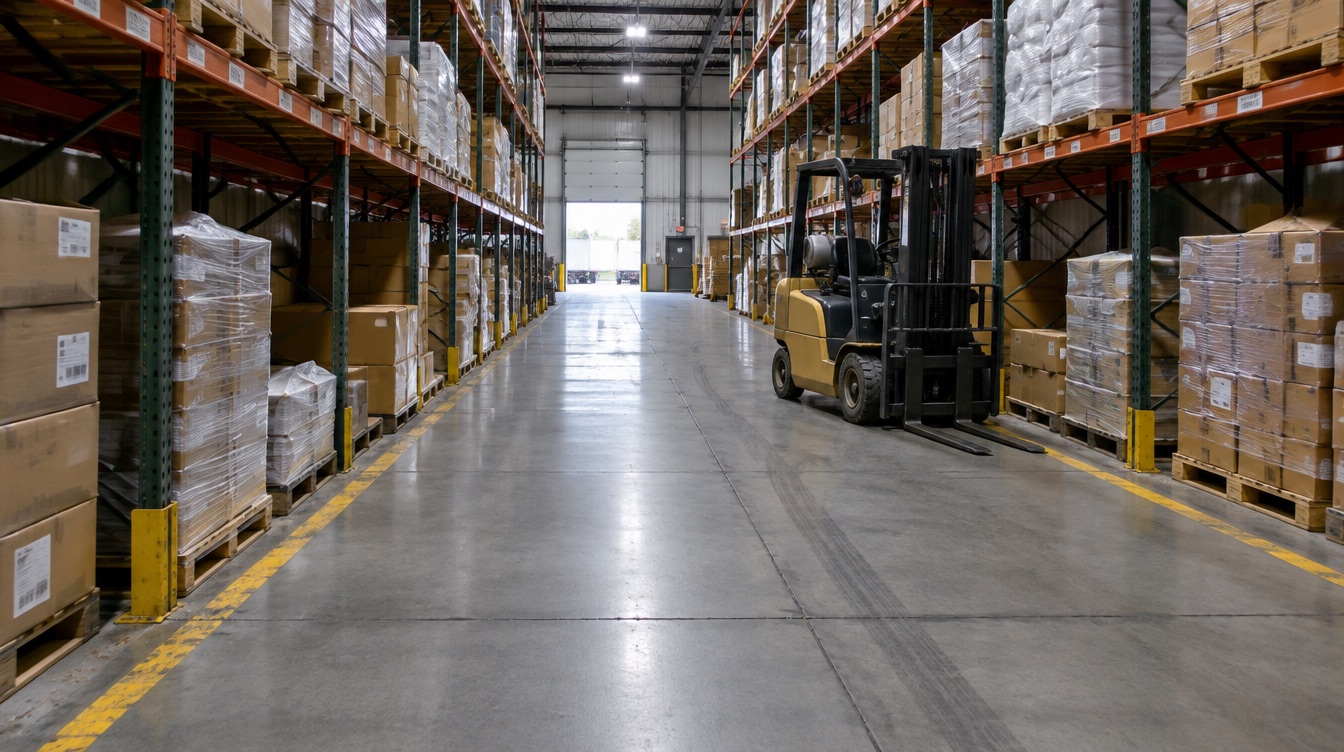
- Typical settings
- Distribution centers, cross-docks, light manufacturing, storage
- Common work
- Joint filling, coatings in high-wear zones, aisle and safety marking
- First question
- Which areas can close, and for how long
Not every square foot needs the same system
Full-floor coatings are not always the best use of a budget. Many warehouses get more value from treating the areas that actually take damage.
Dock aprons and staging lanes
Highest wear from pallet jacks, dragged pallets and salt carried in on trailers. Heavier broadcast builds belong here.
Main forklift aisles
Joint edges spall first. Joint repair and filling often comes before, or instead of, a coating.
Battery charging and maintenance areas
Acid exposure calls for a chemical-resistant system.
Racking zones
Coating under racking adds cost with little benefit unless cleanliness or light reflectance is the goal. Rack anchors must be planned before coating.
Flatness, joints and marking
Floor flatness
Very narrow aisle racking often depends on a specified floor flatness. Thick coatings and joint repairs can change the profile, so we ask whether flatness was specified before recommending a build.
Joint filler
Semi-rigid fillers support wheel edges at sawcut control joints. Joints may need refilling after the slab finishes shrinking; new buildings especially.
Marking
Aisle lines, pedestrian walkways and keep-clear zones can be laid into the system or applied as a separate marking coat. Layout should come from your safety plan.
Phasing around operations
Most warehouse work happens in sections over nights and weekends. A realistic plan states which zone closes, what cure time is needed before forklift traffic, and how product moves around the work. Use the downtime planning guide to separate foot traffic from vehicle service. Fast-cure systems such as polyaspartic topcoats can shorten closures, at the cost of a shorter working time during installation.
Real questions people ask
Should we coat the entire warehouse?
Not necessarily. Joint repair, dock lanes, battery areas and high-wear aisles may deliver more value than coating low-traffic space under racking.
When can forklifts return?
Vehicle traffic normally returns later than foot traffic. The exact window depends on the system, slab temperature and forklift load.
Can aisle lines be built into the floor?
Yes. Lines and pedestrian zones can be installed within the coating schedule, but the final layout should come from the facility safety plan.
Related pages
Tell us about the floor
Enter the total floor area and note which zones concern you most. If available, add photos or a share link showing joints, dock aprons or battery rooms.