Service-bay guide
What floor coating works in an auto repair shop?
The correct system follows the harshest bay: chemicals, hot tires, lift points, welding, rolling loads, drains and the cleaning routine.
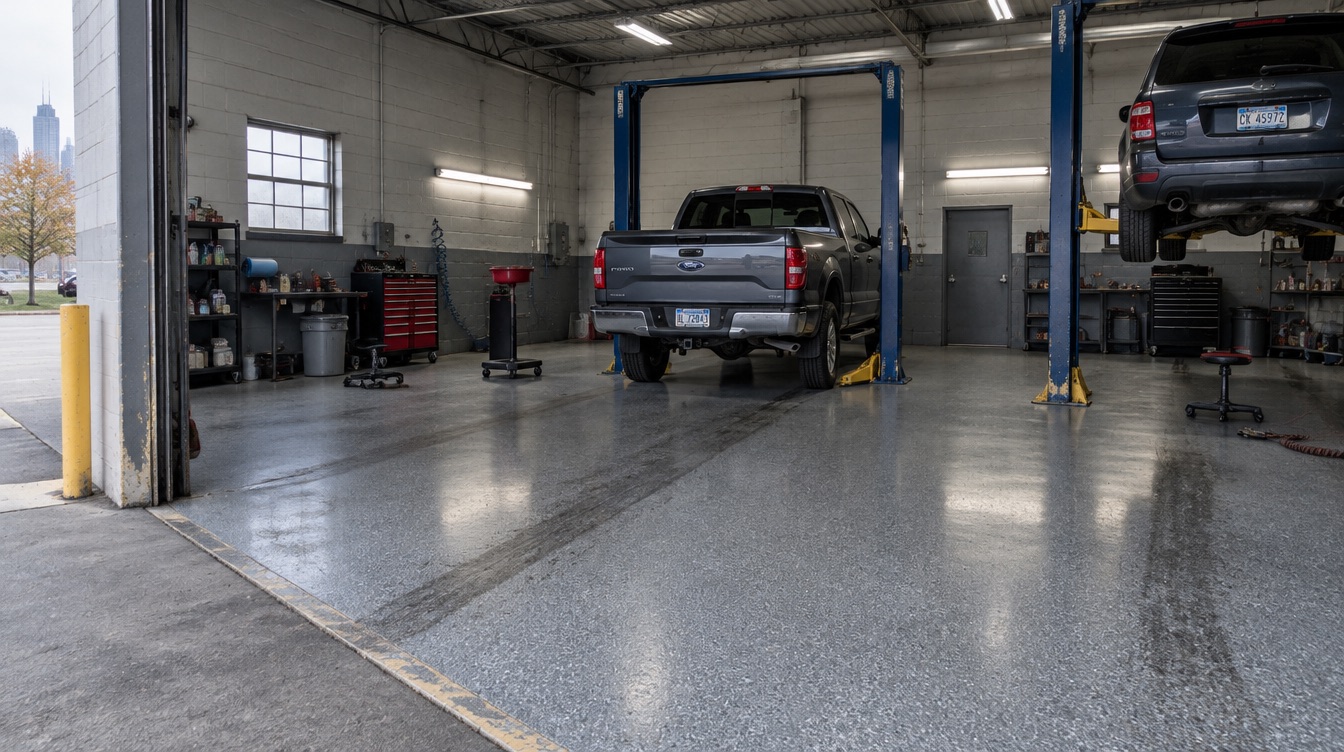
The short answer
A high-build epoxy or other compatible resinous system with a chemical- and abrasion-resistant topcoat is a common starting point for auto-service bays. The exact build changes with brake fluid, fuels, oils, cleaners, battery areas, welding, hot tires, floor jacks and lift columns. Texture must support traction without trapping shop soil. Drains, anchors, cracks and painted safety lines need separate details. No coating makes concrete immune to dropped metal or every chemical; the scope should list exposures, repair strategy and cure before vehicles and lifts return.
The service-bay exposures to map
Vehicle fluids
Engine oil, brake fluid, coolant, fuels, transmission fluid and cleaners vary in severity. Contact time and cleanup response matter.
Tires and turning
Warm tires, steering movement and grit abrade the same lanes. Preparation and topcoat must support repeated vehicle cycles.
Lifts and anchors
Columns, anchor holes and lift edges concentrate load and create difficult terminations. They should be detailed before coating.
Jacks and metal stands
Point loads and dragged equipment can gouge the finish. Use protective practices and expect local repair in severe zones.
Welding and hot work
Sparks and hot metal can burn or pit resinous finishes. Dedicated protection or a different surface may be needed in regular hot-work areas.
Drains and wash areas
Standing water, degreaser and drain rings call for controlled slope, stronger texture and careful perimeter rebuilding.
Markings and color
Bay lines, walkways and hazard zones should be planned as compatible layers with enough cure before tire traffic.
Why the product name is not the whole answer
A finished floor is not one liquid layer. It is a system made from the concrete surface, repairs, primer or base coat, optional broadcast media, and a protective topcoat. The name on the bucket matters less than whether those layers suit the slab and the way the room is used. A careful recommendation therefore starts with what is under the coating, what will travel across it, what can spill on it, and how long the area can stay out of service.
That is also why two rooms of the same size can need different work. One may be clean, dry and mechanically sound. The other may contain oil, weak concrete, an old sealer, damp cracks or joints that move. The visible finish can look similar on installation day while the preparation, repair scope and long-term result are very different.
Chemical resistance is product- and concentration-specific. A general epoxy label is not enough; compare the actual topcoat and base with the shop’s fluids, cleaners and contact times.
The busiest bay should set the specification
An eight-bay shop has six ordinary repair lanes, one alignment bay and one wash/detail bay. The alignment lane sees constant tire movement and steel plates. The wash bay sees water and degreaser. A welding cart occasionally moves through the back corner.
Giving every area the smooth showroom finish may create cleaning or traction problems. Giving every area the roughest wash-bay texture may slow sweeping and make creepers uncomfortable. A zoned plan can use compatible systems with targeted texture, reinforced details and clear transitions.
Phasing keeps part of the shop open, but vehicle routing and cure protection must be rigid. One early tire turn across a young transition can damage the edge between completed and active work.
What a responsible site review checks
The existing surface
Map oil-darkened concrete, existing paint, impact damage, old patches and lift-anchor repairs. The review should distinguish a coating problem from weak or contaminated concrete because covering either one without correcting it simply hides the risk.
Water and moisture
Check wash areas, drains, exterior doors and any below-grade or recurring damp zones. A floor can look dry during a short visit, so visible appearance alone is not a moisture test.
Traffic and exposure
List fluids, cleaners, welding, tires, jacks, stands, carts and vehicle frequency by bay. The heaviest route or harshest cleaning method often controls the system even when most of the room has lighter use.
Edges, joints and drains
Survey lifts, anchors, drains, trenches, bollards, doors and safety-line locations. These transitions deserve their own scope because they are common places for water entry, impact and early wear.
The actual closure window
Create bay phases with protected routes and separate vehicle, chemical and washdown return times. Installation time and full return to service are separate milestones.
How to compare proposals without guessing
A useful proposal identifies the named system, preparation method, repair assumptions, number or purpose of layers, finish texture, cure milestones and exclusions. It should separate “ready for foot traffic” from “ready for vehicles, hot water or chemicals.” If a statement is important to the buying decision, ask for it in the written scope rather than relying on a general product label.
Photos help with early planning, but they do not prove bond strength, contamination or moisture condition. A wide view explains access and layout; close views show cracks, drains, peeling and edge details. Final system selection still depends on a site review and, when the exposure requires it, testing against the selected product limits.
Which fluids were used for selection?
Provide the actual shop products and expected spill duration so resistance is not a generic claim.
How are lift columns and anchors detailed?
Ask whether equipment stays, how edges are prepared and how future lift changes will be repaired.
What can remain open during phasing?
The plan should define active bays, vehicle routes, dust barriers and how young coating is protected.
Real questions, direct answers
Does epoxy resist brake fluid?
Resistance varies by product, concentration and contact time. Check the specified system and require immediate cleanup rather than assuming universal resistance.
Can a coated floor handle floor jacks?
It can support ordinary shop use when the substrate and system fit, but narrow steel wheels, stands and dragging can damage the finish. Use protective procedures.
What texture works under creepers?
A moderate, cleanable texture is often more practical than an aggressive profile. Test the finish with footwear, carts and creepers used in the shop.
Can coating go around existing lifts?
Yes, with careful preparation and termination, though inaccessible concrete and future equipment removal can leave repair needs.
How long before vehicles return?
Follow the exact system and temperature schedule. Foot traffic, vehicle traffic, chemical spills and washdown are separate milestones.
Start with the floor you actually have
Share the room type, approximate area, ZIP code, current floor condition and the deadline that matters. Photos or a share link are useful but optional.