Below-grade floor guide
Can you epoxy a basement floor with moisture?
Sometimes—but the moisture source and measured slab condition must be understood before a low-permeance coating is selected.
The short answer
A basement slab can often be coated when the concrete is sound and the selected primer or system is approved for the measured moisture condition. The wrong response is to treat epoxy as a cure for active water entry. Dark patches after rain, white mineral deposits, damp cracks, wall-floor leakage, blistered paint or musty conditions indicate that the floor needs investigation. Drainage, plumbing, foundation or vapor problems may need correction first. Testing then helps compare the slab with the product limits rather than relying on how dry it looks during one visit.
Warning signs to investigate before coating
Changes after heavy rain
Darkening, puddles or damp wall edges tied to weather suggest exterior drainage or foundation water that a surface coating should not hide.
White mineral deposits
Efflorescence shows that water moved through masonry and left salts behind. The route and severity should be understood before coating.
Blisters in old paint
Bubbles, soft patches and peeling may reveal vapor pressure, contamination or weak concrete. The bond plane provides useful evidence.
Damp cracks or penetrations
Water following a crack, pipe or floor-wall joint is an active path that needs more than a decorative layer.
Musty rooms and stored cardboard
Odor, staining or softened boxes indicate room humidity or intermittent wetness even when the slab surface looks dry.
Sump and drainage history
A frequently running sump, prior seepage or grading problems help explain seasonal conditions that a short visit may miss.
Unknown slab construction
Older basements may lack an effective vapor retarder. Testing and product limits become especially important when records do not exist.
Why the product name is not the whole answer
A finished floor is not one liquid layer. It is a system made from the concrete surface, repairs, primer or base coat, optional broadcast media, and a protective topcoat. The name on the bucket matters less than whether those layers suit the slab and the way the room is used. A careful recommendation therefore starts with what is under the coating, what will travel across it, what can spill on it, and how long the area can stay out of service.
That is also why two rooms of the same size can need different work. One may be clean, dry and mechanically sound. The other may contain oil, weak concrete, an old sealer, damp cracks or joints that move. The visible finish can look similar on installation day while the preparation, repair scope and long-term result are very different.
Moisture-mitigating primers and more tolerant systems are tools with stated limits, not permission to coat active leaks. The complete decision includes building water control, slab testing, concrete strength and finish expectations.
When “the floor is dry today” is not enough
A basement looks dry in late summer. Along one wall, however, white residue follows a hairline crack and the homeowner remembers that boxes felt damp after spring storms. An old painted patch near the utility room has small blisters. Those clues tell a seasonal story that a moisture meter reading at the door cannot settle.
The plan begins outside the coating scope: confirm gutters, grading, drainage, plumbing and any foundation entry. Once active sources are addressed, use an accepted slab test under service conditions and compare the results with the selected product’s written limit.
If the floor is a suitable candidate, preparation and a compatible system can proceed. If active water remains, postponing the coating is better than creating a clean-looking barrier that blisters later.
What a responsible site review checks
The existing surface
Map old paint, adhesive, weak patches, efflorescence and previous water stains. The review should distinguish a coating problem from weak or contaminated concrete because covering either one without correcting it simply hides the risk.
Water and moisture
Record seasonal changes and choose tests that can be compared with the named product limit. A floor can look dry during a short visit, so visible appearance alone is not a moisture test.
Traffic and exposure
Consider laundry leaks, utility equipment, stored items and ordinary foot traffic. The heaviest route or harshest cleaning method often controls the system even when most of the room has lighter use.
Edges, joints and drains
Inspect cracks, penetrations, sump area and the floor-wall joint. These transitions deserve their own scope because they are common places for water entry, impact and early wear.
The actual closure window
Allow time for water-source correction, drying, testing and any required mitigation before finish work. Installation time and full return to service are separate milestones.
How to compare proposals without guessing
A useful proposal identifies the named system, preparation method, repair assumptions, number or purpose of layers, finish texture, cure milestones and exclusions. It should separate “ready for foot traffic” from “ready for vehicles, hot water or chemicals.” If a statement is important to the buying decision, ask for it in the written scope rather than relying on a general product label.
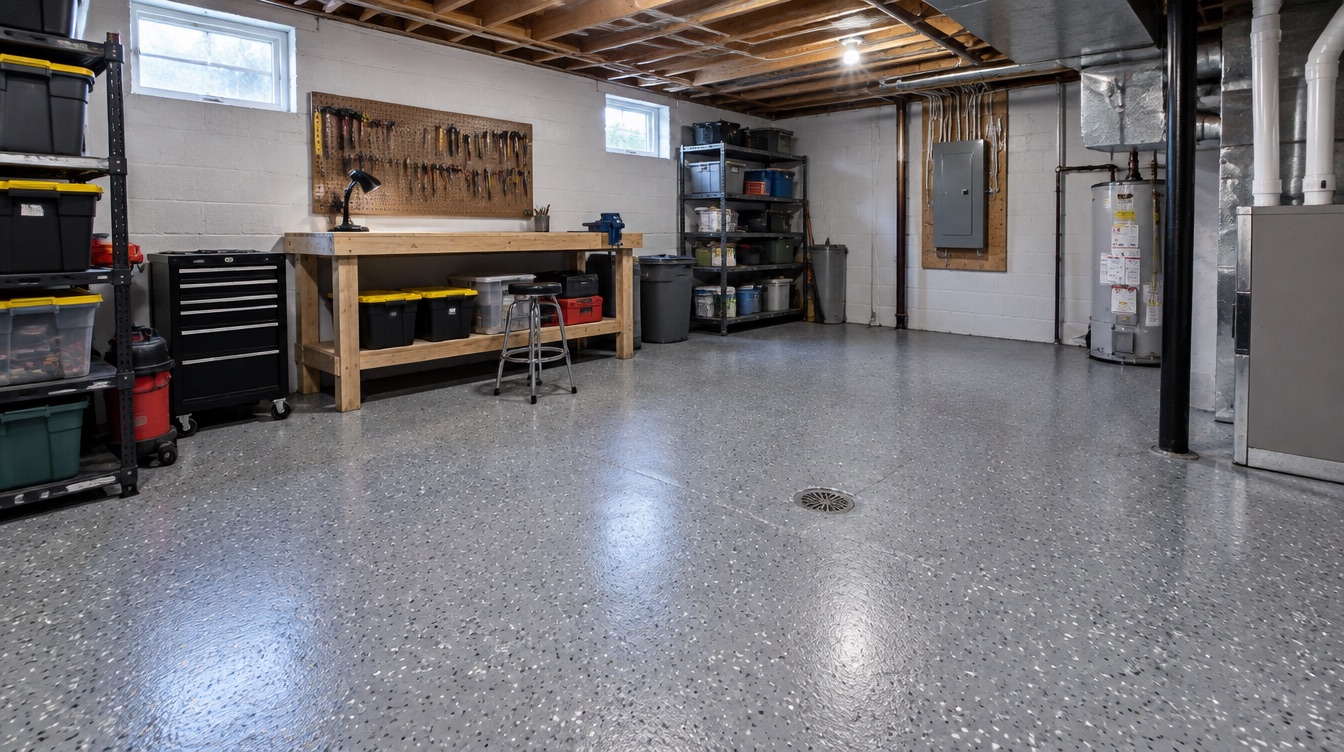
Photos help with early planning, but they do not prove bond strength, contamination or moisture condition. A wide view explains access and layout; close views show cracks, drains, peeling and edge details. Final system selection still depends on a site review and, when the exposure requires it, testing against the selected product limits.
What evidence supports the moisture decision?
Ask which test or site history is being used and how it compares with the exact product data.
What work is outside the coating scope?
Drainage, plumbing, foundation repair and active leak correction should be identified rather than implied to be solved by the floor.
What happens if readings are high?
The proposal should explain whether to wait, mitigate, change systems or decline the coating until conditions change.
Real questions, direct answers
Will epoxy waterproof my basement?
A coating is not a general waterproofing repair for active foundation or drainage problems. Water source control comes first.
Can concrete look dry and still have high moisture?
Yes. Vapor can move through a slab without visible water. Testing provides information that appearance alone cannot.
What does white powder on concrete mean?
It is often mineral residue left as moisture evaporates. Clean it for inspection, then investigate why water moved through the slab or wall.
Is a moisture-tolerant primer always enough?
No. Every product has limits and installation requirements. Active water, weak concrete or severe conditions may require another solution.
Can I coat after fixing exterior drainage?
Possibly, once the area has stabilized and testing supports the selected system. Correcting the source does not instantly prove the slab is ready.
Start with the floor you actually have
Share the room type, approximate area, ZIP code, current floor condition and the deadline that matters. Photos or a share link are useful but optional.