Garage durability guide
How long does an epoxy garage floor last?
The honest answer is a range, and the variables that shorten the range are usually visible before the coating is installed.
The short answer
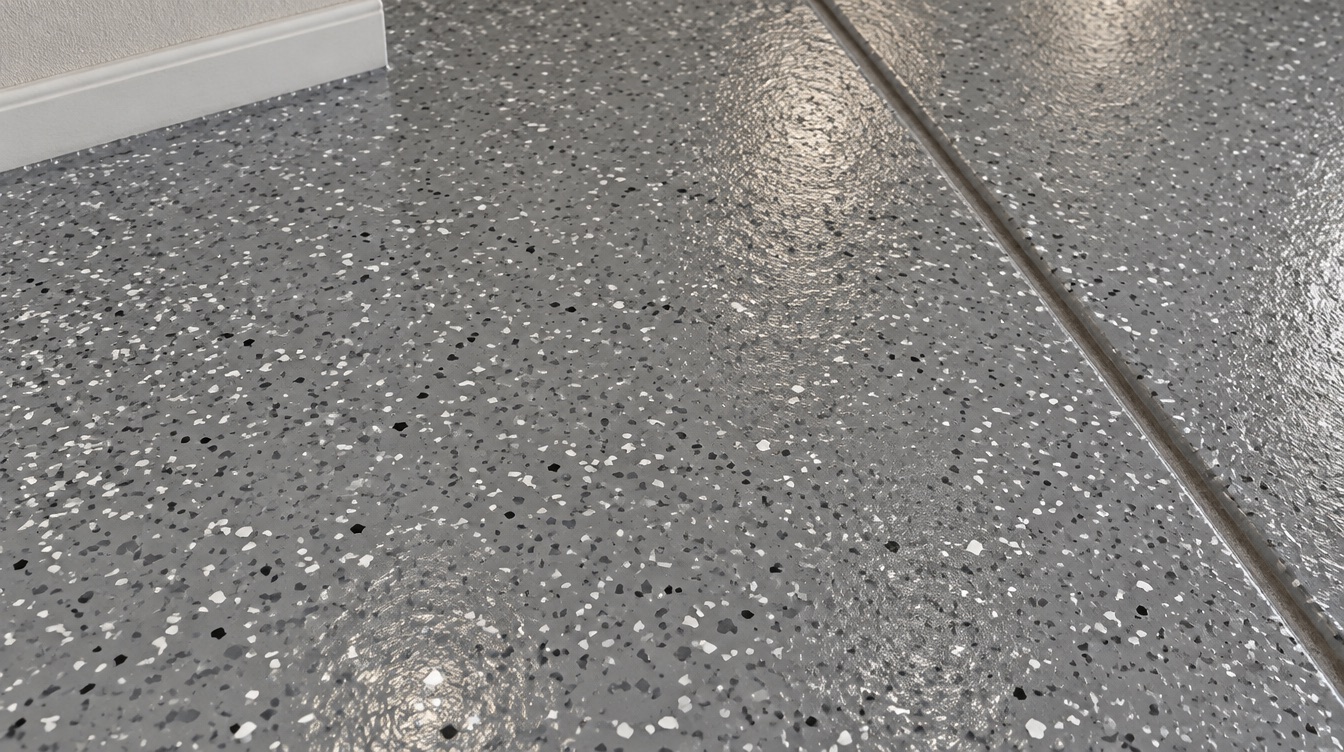
A well-matched garage coating can serve for many years, but no responsible installer can promise a useful lifespan from the word “epoxy” alone. Bond life depends on concrete strength, moisture, contamination removal and surface profile. Appearance life depends on sunlight, tire traffic, dragged equipment, road salt, cleaning and the topcoat. A sound system may remain bonded while its gloss slowly changes in traffic lanes; another may look new but fail early because vapor or oil interrupted the bond. Ask how the assembly handles your specific garage instead of shopping for one universal year count.
What lengthens or shortens service life
Concrete strength and preparation
The coating can only stay attached to the material directly below it. Grinding must expose sound concrete rather than leaving weak paste, sealer or contamination.
Moisture movement
Vapor coming through the slab can stress the bond. Recurring dampness or mineral deposits deserve investigation before another nonpermeable layer is added.
Hot tires and turning loads
Warm tires can stress marginal bond areas, especially when a vehicle turns while stationary. Strong preparation and a suitable topcoat reduce the risk.
Sunlight at the door
Some epoxy layers amber or chalk with ultraviolet exposure. A UV-stable topcoat helps preserve color at the open doorway and in bright garages.
Winter salt and grit
Salt solution is aggressive at damaged edges, while sand acts like an abrasive under tires. Timely rinsing and controlled cleaning protect the finish.
Impact and dragging
Metal stands, snowblower edges, floor jacks and dragged storage can cut or chip a coating that handles ordinary tires without trouble.
Maintenance timing
Cleaning grit before it is ground into traffic lanes and refreshing a worn topcoat before the base is exposed can extend appearance life.
Why the product name is not the whole answer
A finished floor is not one liquid layer. It is a system made from the concrete surface, repairs, primer or base coat, optional broadcast media, and a protective topcoat. The name on the bucket matters less than whether those layers suit the slab and the way the room is used. A careful recommendation therefore starts with what is under the coating, what will travel across it, what can spill on it, and how long the area can stay out of service.
That is also why two rooms of the same size can need different work. One may be clean, dry and mechanically sound. The other may contain oil, weak concrete, an old sealer, damp cracks or joints that move. The visible finish can look similar on installation day while the preparation, repair scope and long-term result are very different.
Think of the finish as a wear surface over a bonded system. A durable base can be protected by a sacrificial topcoat that is easier to renew than the full floor. The maintenance plan should identify early wear, edge damage and cleaning methods that are safe for the chosen finish.
Bond life and appearance life are not the same
A family parks two vehicles, opens the south-facing door every afternoon and stores a snowblower near the entrance. After several seasons, the tire lanes look less glossy than the wall edges. That change does not automatically mean the coating has failed. The surface may be bonded and cleanable while the topcoat shows normal abrasion.
Now compare that with a small blister that grows after wet weather or a sheet of coating that lifts with clean concrete on its underside. Those are bond or substrate clues, not routine wear. More gloss cleaner will not correct them. The right response is to identify moisture, weak concrete or contamination before repairing the area.
This distinction matters when evaluating warranties and maintenance. A promise should state what is covered: bond failure, normal wear, color change, impact, cracks or something else. A single lifespan number cannot describe every one of those conditions.
What a responsible site review checks
The existing surface
Identify weak concrete, old coating, tire residue and existing repair material before profiling. The review should distinguish a coating problem from weak or contaminated concrete because covering either one without correcting it simply hides the risk.
Water and moisture
Note damp walls, seasonal puddles, white deposits and previous blistering. A floor can look dry during a short visit, so visible appearance alone is not a moisture test.
Traffic and exposure
Record vehicle count, turning points, workbench use, jacks, snow equipment and sunlight. The heaviest route or harshest cleaning method often controls the system even when most of the room has lighter use.
Edges, joints and drains
Pay special attention to the overhead-door edge and any place the coating is thin or damaged. These transitions deserve their own scope because they are common places for water entry, impact and early wear.
The actual closure window
Plan both installation cure time and future maintenance access before the finish becomes worn through. Installation time and full return to service are separate milestones.
How to compare proposals without guessing
A useful proposal identifies the named system, preparation method, repair assumptions, number or purpose of layers, finish texture, cure milestones and exclusions. It should separate “ready for foot traffic” from “ready for vehicles, hot water or chemicals.” If a statement is important to the buying decision, ask for it in the written scope rather than relying on a general product label.
Photos help with early planning, but they do not prove bond strength, contamination or moisture condition. A wide view explains access and layout; close views show cracks, drains, peeling and edge details. Final system selection still depends on a site review and, when the exposure requires it, testing against the selected product limits.
What failure mode is the system designed to prevent?
The answer should connect preparation, primer and topcoat to moisture, hot tires, ultraviolet light and salt exposure in the garage.
How is normal wear handled?
Ask how to clean the floor, what early wear looks like and whether a maintenance topcoat can be applied before the base is exposed.
What does any written coverage exclude?
Read definitions for wear, impact, cracks, moisture, ultraviolet color change and owner maintenance instead of relying on the headline term.
Real questions, direct answers
Does epoxy wear out under car tires?
Tire lanes can lose gloss or texture sooner than low-traffic edges. That is surface wear, which is different from peeling or debonding.
Will sunlight ruin an epoxy garage floor?
Some epoxy layers change color with ultraviolet exposure. A UV-stable topcoat can protect appearance, especially near open doors, but product selection still matters.
Does road salt shorten coating life?
Salt solution and trapped grit can accelerate wear and attack damaged edges. Routine rinsing, appropriate cleaning and timely repairs reduce that exposure.
Can an old coating be refreshed without complete removal?
If the existing system is firmly bonded and compatible, cleaning, abrasion and a maintenance topcoat may be possible. Loose or contaminated material must be removed first.
Is a longer written warranty proof of a better floor?
No. Read the covered conditions, exclusions, maintenance duties and remedy. The installation scope and fit for the slab matter more than the headline length.
Start with the floor you actually have
Share the room type, approximate area, ZIP code, current floor condition and the deadline that matters. Photos or a share link are useful but optional.