Safety and cleaning guide
Is epoxy flooring slippery when wet?
A smooth resin floor can become slippery with water, grease or residue. Texture helps, but the right answer also includes drainage, cleaning and footwear.
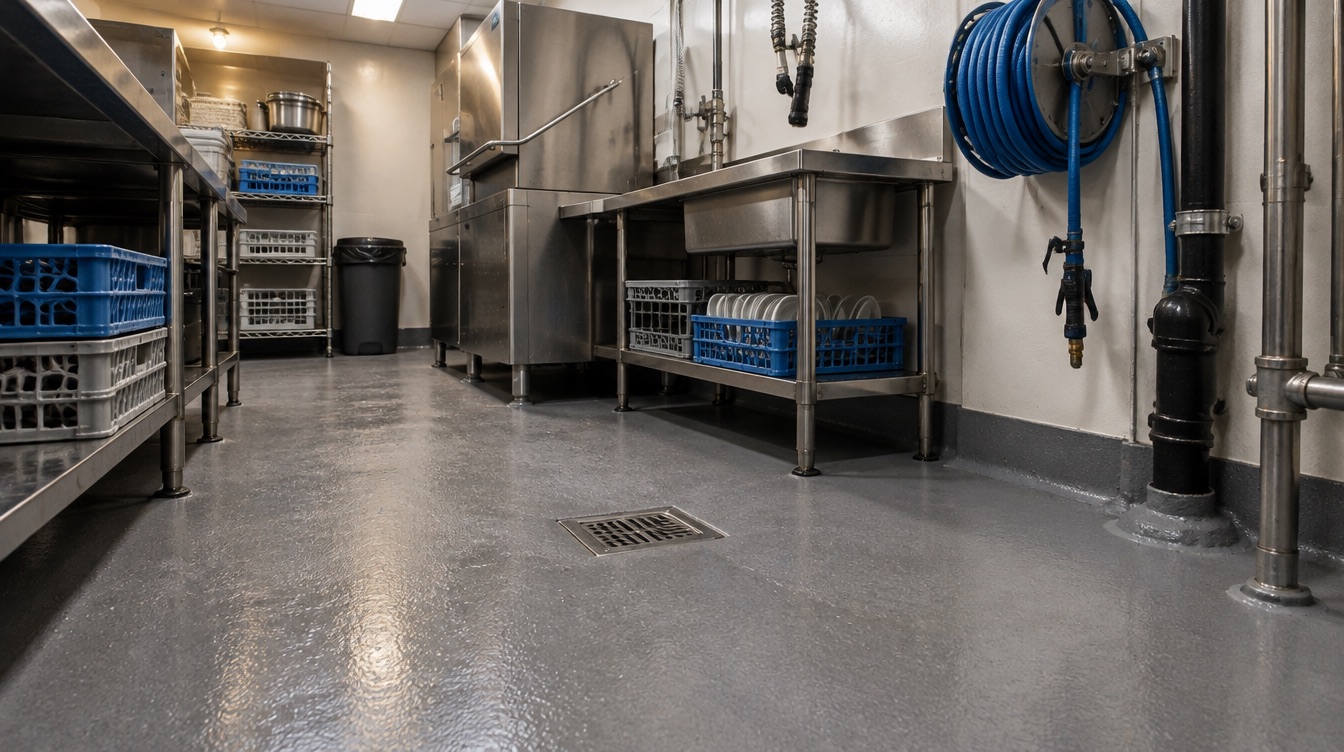
The short answer
Yes, a smooth epoxy or resinous floor can be slippery when wet, just as many smooth hard floors can. The practical response is not to add the roughest aggregate everywhere. Texture must match the contaminant, slope, cleaning tools, footwear and traffic. Too little texture may not provide the desired grip; too much can trap soil, slow mopping and create an uncomfortable surface for carts. Wet-process areas also need drainage and housekeeping. OSHA requires workplace walking-working surfaces to be maintained clean and, to the extent feasible, dry, with drainage for wet processes. The coating is one part of that system.
What changes traction in the real room
The contaminant
Clean water, cooking grease, soap, coolant and fine powder create different slip conditions. A texture chosen for one may not solve another.
Texture size and density
More aggregate can increase surface profile, but distribution and topcoat coverage affect both grip and cleanability.
Slope and drainage
Texture does not remove standing water. Drains, pitch, curbs and squeegee routes determine how long liquid remains in walking paths.
Cleaning residue
Too much detergent or incomplete rinsing can leave a slippery film even on a textured floor. Cleaning procedure matters after installation.
Footwear and wheels
Kitchen shoes, dress shoes, carts and pallet jacks interact differently with the same surface. Evaluate the users who face the greatest risk.
Wear pattern
Aggregate can round or topcoat can polish in busy lanes. Routine inspection should compare high-traffic zones with protected edges.
Transitions
A sudden change from smooth to rough, wet to dry or one elevation to another can create its own trip or handling issue.
Why the product name is not the whole answer
A finished floor is not one liquid layer. It is a system made from the concrete surface, repairs, primer or base coat, optional broadcast media, and a protective topcoat. The name on the bucket matters less than whether those layers suit the slab and the way the room is used. A careful recommendation therefore starts with what is under the coating, what will travel across it, what can spill on it, and how long the area can stay out of service.
That is also why two rooms of the same size can need different work. One may be clean, dry and mechanically sound. The other may contain oil, weak concrete, an old sealer, damp cracks or joints that move. The visible finish can look similar on installation day while the preparation, repair scope and long-term result are very different.
Slip resistance is a condition-dependent property, not a permanent adjective. Testing can help compare surfaces, but results must be interpreted for the contaminant, shoe or tire and method used. The maintenance plan remains essential.
Why the roughest floor can still be the wrong floor
A restaurant dish area is wet and greasy, so the owner asks for maximum aggregate. The existing mop sink, however, does not drain well and staff use flat mops that glide over deep texture. The new floor may feel aggressive under a dry boot while still holding greasy residue between peaks.
A better plan starts with the full cleaning cycle. Correct standing-water routes, choose a texture that staff can scrub, identify the right brush or pad and provide footwear expectations. Use stronger texture where exposure is highest and avoid unnecessary roughness in dry storage or customer areas.
The same logic applies to garages and clinics. The answer should follow the contaminant and maintenance equipment, not one universal grit label.
What a responsible site review checks
The existing surface
Compare existing texture, polished lanes, soap film, damaged topcoat and areas that stay visibly dirty. The review should distinguish a coating problem from weak or contaminated concrete because covering either one without correcting it simply hides the risk.
Water and moisture
Find standing-water routes, leaks, condensation and drains that do not recover liquid. A floor can look dry during a short visit, so visible appearance alone is not a moisture test.
Traffic and exposure
List water, grease, chemicals, snow, powders, footwear and rolling traffic. The heaviest route or harshest cleaning method often controls the system even when most of the room has lighter use.
Edges, joints and drains
Review ramps, doorways, drain rings, cove edges and transitions to adjacent flooring. These transitions deserve their own scope because they are common places for water entry, impact and early wear.
The actual closure window
Include cleaning trials, cure time and staff access before reopening wet processes. Installation time and full return to service are separate milestones.
How to compare proposals without guessing
A useful proposal identifies the named system, preparation method, repair assumptions, number or purpose of layers, finish texture, cure milestones and exclusions. It should separate “ready for foot traffic” from “ready for vehicles, hot water or chemicals.” If a statement is important to the buying decision, ask for it in the written scope rather than relying on a general product label.
Photos help with early planning, but they do not prove bond strength, contamination or moisture condition. A wide view explains access and layout; close views show cracks, drains, peeling and edge details. Final system selection still depends on a site review and, when the exposure requires it, testing against the selected product limits.
What contaminant is the texture designed for?
Ask the recommendation to address water, grease, soap, chemicals or winter slush rather than using a generic traction term.
How will the floor be cleaned?
Match the aggregate and finish to the available scrubber, brush, mop, squeegee and rinse recovery.
Where will texture change?
Identify wet zones, dry zones, ramps and transitions so users do not meet an unexpected surface change.
Real questions, direct answers
Can anti-slip additive make a floor completely slip-proof?
No. Texture can improve traction, but contamination, footwear, drainage, wear and behavior still affect slip risk.
Is more texture always safer?
No. Very rough finishes can trap grease or soap and become difficult to clean. The useful texture is one the operation can maintain.
Can texture be added to an existing floor?
If the coating is sound and compatible, cleaning, abrasion and a new textured topcoat may be possible. Loose areas must be corrected first.
How do I know when texture is worn?
Compare high-traffic lanes with protected edges, inspect after cleaning and document locations that become polished or harder to keep safe.
What rule applies to workplace floors?
OSHA 1910.22 addresses clean, orderly and, to the extent feasible, dry walking-working surfaces and drainage for wet processes.
Start with the floor you actually have
Share the room type, approximate area, ZIP code, current floor condition and the deadline that matters. Photos or a share link are useful but optional.