Midwest maintenance
How should a coated garage floor handle road salt?
The coating should resist ordinary winter exposure, but salt solution, embedded grit and damaged edges still need a cleaning and inspection plan.
The short answer
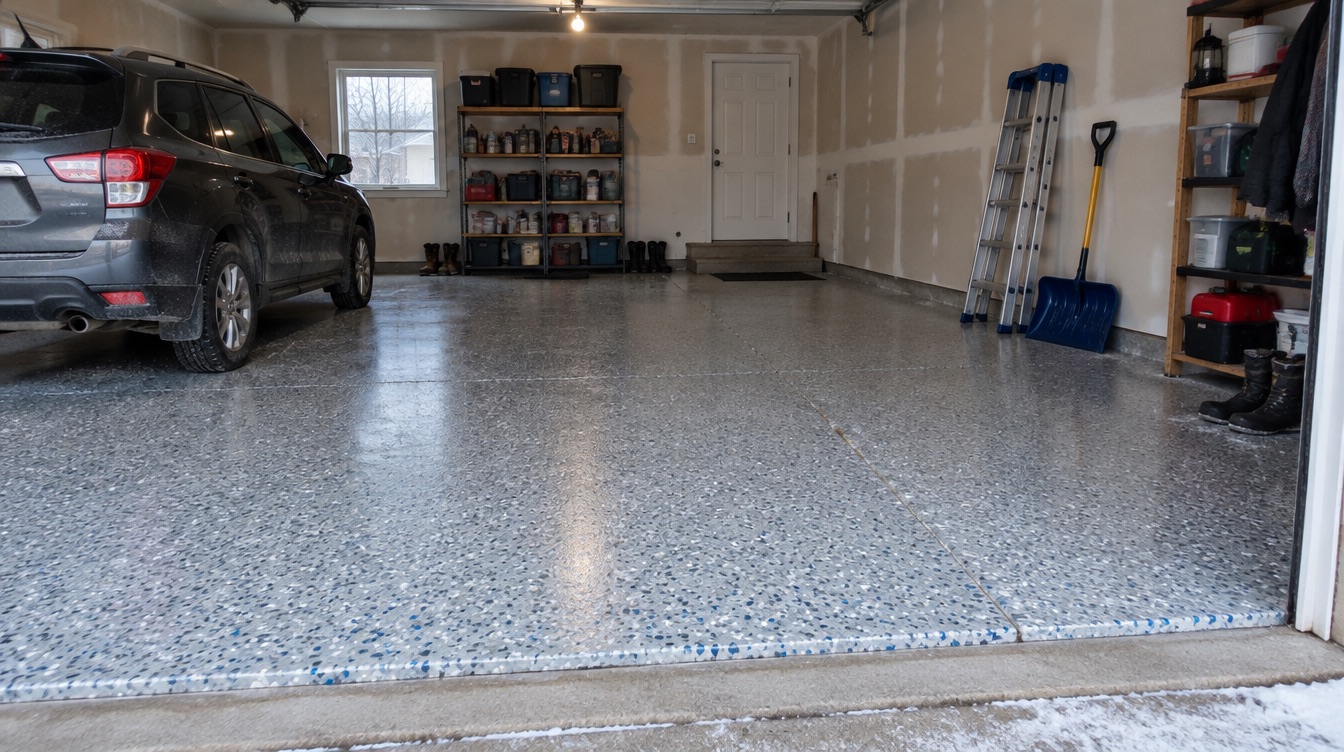
A properly selected and cured garage system should be designed for vehicles carrying snow, salt and slush, yet winter care still matters. Meltwater holds chloride and fine road grit against the finish. Tires grind that grit through the same lanes, while freeze-thaw conditions attack exposed concrete at the overhead-door edge. Remove loose grit, collect standing water and rinse residues before they build into a hard film. Use cleaning products and pads approved for the topcoat, and repair chips before water reaches under an edge.
The winter conditions that deserve attention
Grit under tires
Sand and road debris act like abrasive media. Dry removal before wet cleaning prevents the first pass from grinding particles into the finish.
Concentrated salt film
Repeated snowmelt can leave a pale residue that holds soil and becomes slippery. Controlled rinsing and recovery are better than letting dirty water evaporate.
Standing water
Puddles extend chemical contact and move soil toward cracks, joints and cabinet edges. Squeegees or wet recovery help where the slab does not drain.
Overhead-door edge
The coating termination sees sun, rain, snowplow debris and freeze-thaw stress. Exposed or damaged concrete should not be ignored.
Rubber mats
Mats can trap salty moisture for days. Lift and clean beneath them, and confirm that rubber or backing is compatible with the coating.
Harsh cleaners
Very strong chemicals and aggressive pads can dull the finish faster than the winter soil itself. Start with the maintenance instructions for the named topcoat.
Small chips
A chip is a path for water and impact to work at an edge. Clean and repair it before traffic enlarges the opening.
Why the product name is not the whole answer
A finished floor is not one liquid layer. It is a system made from the concrete surface, repairs, primer or base coat, optional broadcast media, and a protective topcoat. The name on the bucket matters less than whether those layers suit the slab and the way the room is used. A careful recommendation therefore starts with what is under the coating, what will travel across it, what can spill on it, and how long the area can stay out of service.
That is also why two rooms of the same size can need different work. One may be clean, dry and mechanically sound. The other may contain oil, weak concrete, an old sealer, damp cracks or joints that move. The visible finish can look similar on installation day while the preparation, repair scope and long-term result are very different.
Decorative flakes can hide light soil, which is helpful visually but makes touch inspection important. Texture that improves wet traction also holds more residue and requires better rinsing than a very smooth finish.
A simple winter cleaning rhythm
After a storm, let vehicles shed snow, then remove loose sand and gravel when the surface is safe to clean. Recover standing slush instead of pushing it against drywall, cabinets or an unsealed joint. Once the heavy soil is gone, use a diluted neutral cleaner and a soft pad or brush suitable for the texture.
Rinse without flooding areas that cannot drain, then remove the dirty solution. Look along the door threshold, tire lanes and repaired cracks while the floor is clean. A dull path may be wear; a sharp lifted edge, blister or hollow area needs diagnosis.
In spring, perform a fuller wash and document any damage. That is the best time to address isolated chips or discuss a maintenance topcoat before another winter exposes the base layer.
What a responsible site review checks
The existing surface
Look for worn gloss, chips, exposed concrete, stubborn salt film and scratches that collect dark soil. The review should distinguish a coating problem from weak or contaminated concrete because covering either one without correcting it simply hides the risk.
Water and moisture
Note standing-water patterns, wet wall edges and deposits around cracks. A floor can look dry during a short visit, so visible appearance alone is not a moisture test.
Traffic and exposure
Map where each vehicle drips, where tires turn and where snow equipment is stored. The heaviest route or harshest cleaning method often controls the system even when most of the room has lighter use.
Edges, joints and drains
Inspect the door threshold, apron joint, mats, cabinets and floor-wall transitions. These transitions deserve their own scope because they are common places for water entry, impact and early wear.
The actual closure window
Plan routine storm cleanup and a spring condition review rather than waiting for visible peeling. Installation time and full return to service are separate milestones.
How to compare proposals without guessing
A useful proposal identifies the named system, preparation method, repair assumptions, number or purpose of layers, finish texture, cure milestones and exclusions. It should separate “ready for foot traffic” from “ready for vehicles, hot water or chemicals.” If a statement is important to the buying decision, ask for it in the written scope rather than relying on a general product label.
Photos help with early planning, but they do not prove bond strength, contamination or moisture condition. A wide view explains access and layout; close views show cracks, drains, peeling and edge details. Final system selection still depends on a site review and, when the exposure requires it, testing against the selected product limits.
What finish texture fits winter use?
Balance wet traction with the ability to remove salt and grit using the cleaning equipment available at home.
How is the door edge terminated?
Ask how the coating meets the exterior slab and how exposed concrete or movement at that transition is handled.
What maintenance products are approved?
Request a simple written list of cleaner types, pads and methods to avoid so routine care does not damage the topcoat.
Real questions, direct answers
Can road salt stain an epoxy floor?
Residue can leave a pale film and hold dirt. Timely, compatible cleaning usually controls it, while damaged or worn areas may absorb discoloration differently.
Should I pressure-wash a coated garage?
Only when water can be contained and the pressure, tip and distance will not cut edges or drive water under damaged coating. Controlled scrub-and-recovery is often easier indoors.
Are rubber winter mats safe?
They can be useful, but lift them to remove trapped moisture and confirm that the backing will not stain or soften the finish.
Why is the coating damaged near the garage door?
That zone sees sunlight, exterior water, freeze-thaw exposure, snow tools and concentrated grit. The termination and underlying concrete need close attention.
When should a worn floor receive a new topcoat?
Consider renewal when the finish is uniformly dull, harder to clean or losing texture but the underlying system remains firmly bonded and sound.
Start with the floor you actually have
Share the room type, approximate area, ZIP code, current floor condition and the deadline that matters. Photos or a share link are useful but optional.