Cure-time guide
When can you park on a new epoxy floor?
Use the written vehicle-return time for the exact system and temperature—not the moment the surface first feels dry.
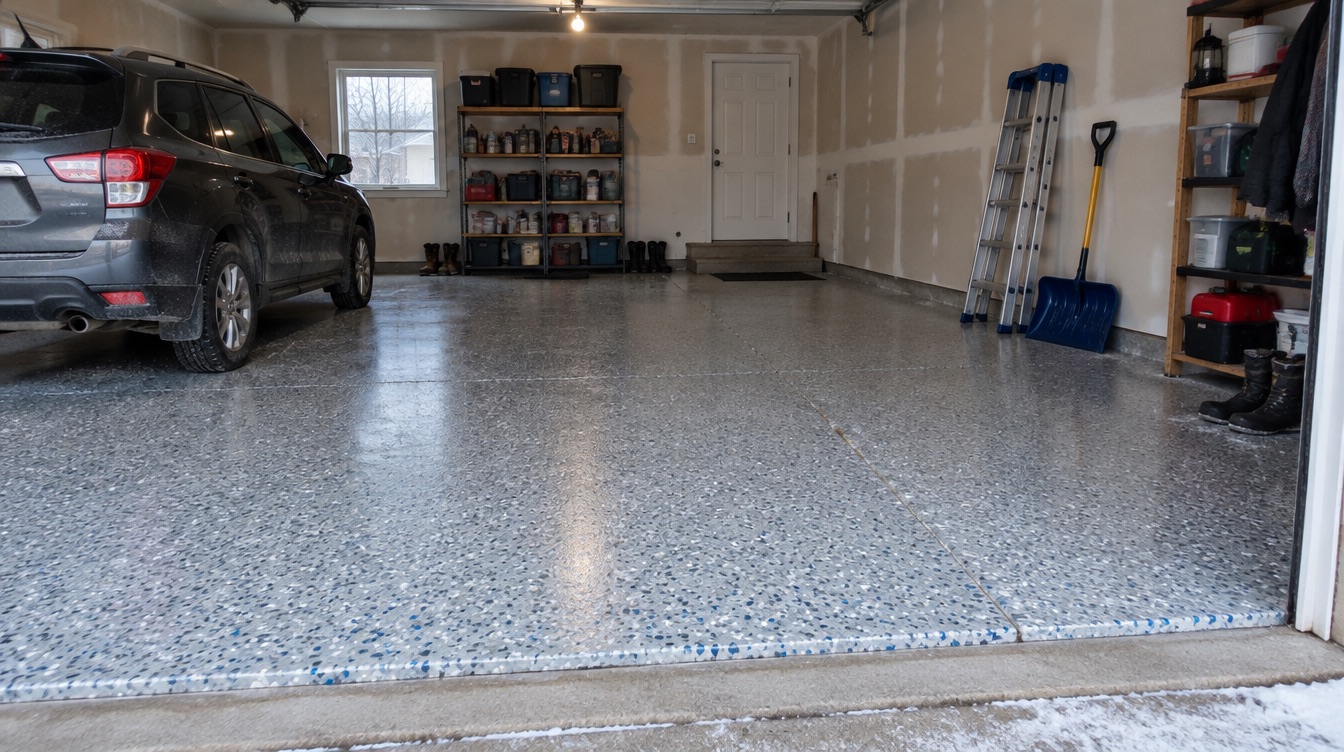
The short answer
Parking time depends on the named primer, base, broadcast and topcoat, as well as concrete temperature, air temperature, humidity and layer thickness. The floor may accept careful foot traffic before it can accept a heavy vehicle, hot tires or stationary turning. Storage cabinets, kickstands, floor jacks and rubber mats also create concentrated or trapped conditions. The installer should provide separate milestones for walking, replacing light items, replacing heavy items and vehicle traffic. If the floor is colder than expected, the schedule may need to extend.
Why the vehicle milestone comes later
Surface dry is only an early stage
A coating can stop feeling tacky before the full film develops the properties needed for tire heat, weight and turning.
Concrete can be colder than the room
The slab stores temperature. A heated room does not mean that the concrete reached the condition assumed by the product schedule.
Every layer has a window
A multi-layer system follows the cure and recoat requirements of each product. The final topcoat clock is not the only time in the plan.
Vehicles create concentrated loads
Tire contact carries weight into small areas. Turning while stationary adds shear that ordinary walking does not create.
Heavy storage can mark a young film
Narrow cabinet feet, motorcycle stands and rolling jacks can dent or stress the finish before it reaches service properties.
Rubber and plastic can trap conditions
Mats, bins and tires placed too early may restrict air, hold moisture or interact with an incompletely cured surface.
Cold weather changes the promise
Cure charts are based on conditions. If the slab cools overnight, a schedule based on warm daytime air may be too short.
Why the product name is not the whole answer
A finished floor is not one liquid layer. It is a system made from the concrete surface, repairs, primer or base coat, optional broadcast media, and a protective topcoat. The name on the bucket matters less than whether those layers suit the slab and the way the room is used. A careful recommendation therefore starts with what is under the coating, what will travel across it, what can spill on it, and how long the area can stay out of service.
That is also why two rooms of the same size can need different work. One may be clean, dry and mechanically sound. The other may contain oil, weak concrete, an old sealer, damp cracks or joints that move. The visible finish can look similar on installation day while the preparation, repair scope and long-term result are very different.
A fast return is a legitimate design goal, but it should be achieved by choosing a suitable system and planning the work—not by treating early hardness as full cure.
Plan four return times, not one
The crew finishes a decorative garage on Tuesday. The owner needs to enter the room, reinstall shelving, roll in a freezer and park two vehicles. Those are four different loads. Careful foot traffic may be first, followed by light movable items. Heavy cabinets and appliances may need wider protection or more cure. Vehicles come last.
The plan should also address the route. Rolling a freezer across a young finish creates a narrow moving load. Turning a front tire in place is harsher than driving straight. A motorcycle kickstand can concentrate weight into a tiny point.
Write the dates and times down before installation. If temperature falls or a layer is applied later than planned, update the schedule. That small communication step prevents many avoidable marks.
What a responsible site review checks
The existing surface
Confirm the final layer and whether any area received extra build or late repair. The review should distinguish a coating problem from weak or contaminated concrete because covering either one without correcting it simply hides the risk.
Water and moisture
Protect the new finish from wet vehicles and trapped mats until the stated milestone. A floor can look dry during a short visit, so visible appearance alone is not a moisture test.
Traffic and exposure
List vehicles, jacks, kickstands, freezers, cabinets and rolling storage by load type. The heaviest route or harshest cleaning method often controls the system even when most of the room has lighter use.
Edges, joints and drains
Plan door thresholds and travel routes so equipment does not scrape or pivot on the young surface. These transitions deserve their own scope because they are common places for water entry, impact and early wear.
The actual closure window
Record separate times for walking, light items, heavy items and vehicle parking. Installation time and full return to service are separate milestones.
How to compare proposals without guessing
A useful proposal identifies the named system, preparation method, repair assumptions, number or purpose of layers, finish texture, cure milestones and exclusions. It should separate “ready for foot traffic” from “ready for vehicles, hot water or chemicals.” If a statement is important to the buying decision, ask for it in the written scope rather than relying on a general product label.
Photos help with early planning, but they do not prove bond strength, contamination or moisture condition. A wide view explains access and layout; close views show cracks, drains, peeling and edge details. Final system selection still depends on a site review and, when the exposure requires it, testing against the selected product limits.
Which product controls vehicle return?
Ask for the final-layer data and the assumed temperature rather than a general statement about the chemistry.
What changes if the slab is cold?
The proposal should explain who checks conditions and how the schedule is updated if cure slows.
How should heavy items be moved back?
Request guidance on wheels, protective sheets, lifting rather than dragging, and point-load protection.
Real questions, direct answers
Can I walk on the floor before I can park?
Often yes. Foot traffic is a lighter milestone, but use the installer’s written time and walk carefully without dragging items.
Can I park sooner if I drive straight in?
Straight movement reduces turning stress but does not replace the required vehicle cure. Wait for the stated milestone.
Why did a tire leave a mark without peeling?
The finish may have accepted weight before reaching full traffic properties. The mark can be surface indentation or interaction rather than bond failure.
When can I put rubber mats down?
Ask for a separate mat or covering time. A mat can trap moisture or restrict air over a finish that is still developing cure.
Does warm air make the slab cure faster?
It can help, but the concrete temperature and product limits remain important. Direct unsafe heat or unplanned ventilation can create other problems.
Start with the floor you actually have
Share the room type, approximate area, ZIP code, current floor condition and the deadline that matters. Photos or a share link are useful but optional.