Garage cost guide
What changes the cost of an epoxy garage floor?
Square footage matters, but the concrete under the coating usually creates the largest difference between a simple garage and a difficult one.
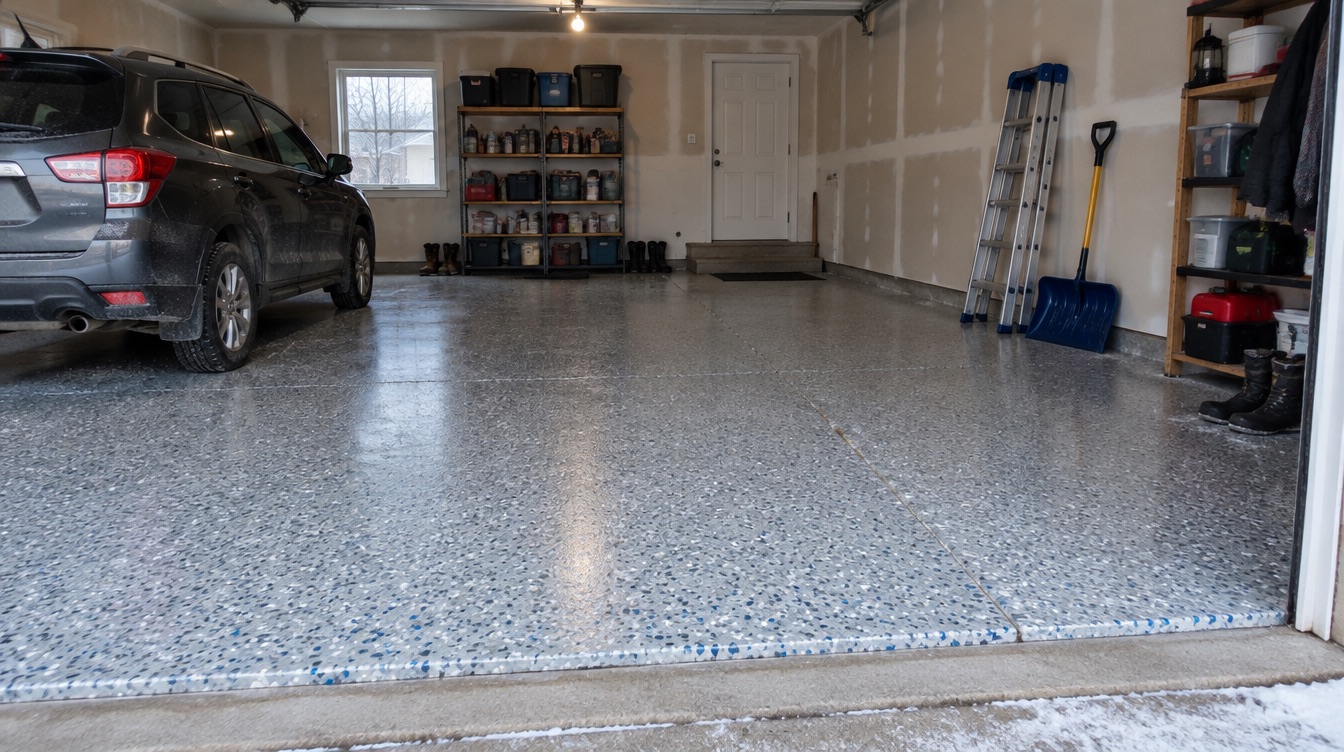
The short answer
A garage coating quote is shaped by the size and layout, surface preparation, crack and joint work, contamination, moisture risk, coating build, decorative broadcast, topcoat, access and the time allowed for curing. A bare, sound two-car slab with an open doorway is a different project from a tight garage with old paint, oil around parking positions, salt damage at the door and storage that must be moved in stages. The honest way to compare cost is to compare scopes line by line, not just divide each total by the measured floor area.
The seven cost drivers worth checking
Mechanical preparation
Grinding clean concrete is more predictable than removing a bonded sealer, thick paint or several failed layers. Preparation equipment, edges and dust control all affect labor.
Repairs and weak concrete
Hairline cracks, moving joints, spalls and scaled concrete need different treatments. A price that simply says “fill cracks” does not explain which conditions are included.
Oil, silicone and tire residues
Deep contamination can require repeated cleaning, removal or a repair decision. Coating over a surface that only looks clean is not a durable shortcut.
Moisture risk
Below-grade garages, older slabs and recurring damp areas may need testing or a moisture-tolerant approach before the decorative layers are chosen.
System thickness and finish
A thin solid-color coat, a full-broadcast flake floor and a higher-build system are different assemblies with different material and labor requirements.
Access and occupied contents
Built-in cabinets, stairs, equipment, floor drains and stored items slow edge work and may require phases instead of one open installation area.
Return-to-service requirements
A faster-curing system can shorten the closure, while cold concrete can lengthen it. Parking time should be stated for the actual product and conditions.
Why the product name is not the whole answer
A finished floor is not one liquid layer. It is a system made from the concrete surface, repairs, primer or base coat, optional broadcast media, and a protective topcoat. The name on the bucket matters less than whether those layers suit the slab and the way the room is used. A careful recommendation therefore starts with what is under the coating, what will travel across it, what can spill on it, and how long the area can stay out of service.
That is also why two rooms of the same size can need different work. One may be clean, dry and mechanically sound. The other may contain oil, weak concrete, an old sealer, damp cracks or joints that move. The visible finish can look similar on installation day while the preparation, repair scope and long-term result are very different.
For most residential garages, the practical comparison is between a decorative broadcast system with an epoxy base, a faster polyaspartic-centered build, or a hybrid that uses each chemistry where it performs best. The correct scope explains why the selected build fits hot tires, sunlight at the door, winter salt and the owner’s schedule.
A two-car garage that looks simple but is not
Imagine a garage that measures like an ordinary two-car space. The back half is clean and dry, but the tire paths contain dark residue, the door edge has winter scaling, one control joint crosses both parking positions and an older clear sealer remains near the walls. A one-line quote based only on area treats all of that as identical concrete.
A useful plan separates the work. It confirms how the sealer will be removed, whether the tire-path contamination can be cut back to sound concrete, which cracks are static, how the control joint will be handled, and whether the weakened door edge can support a coating. It also states where the decorative broadcast terminates and when vehicles may return. Those decisions explain the quote far better than a generic label such as “premium epoxy.”
If another garage of the same size is bare, sound and open, it should not be surprising that its scope is simpler. The area did not change; the work required to create a bond did.
What a responsible site review checks
The existing surface
Look for paint, clear sealer, curing compound, laitance, scaling and previous patch material. The review should distinguish a coating problem from weak or contaminated concrete because covering either one without correcting it simply hides the risk.
Water and moisture
Ask about dark marks after rain, white mineral deposits and below-grade walls. A floor can look dry during a short visit, so visible appearance alone is not a moisture test.
Traffic and exposure
Map tire paths, snow-melt areas, workbench zones, jacks and rolling storage. The heaviest route or harshest cleaning method often controls the system even when most of the room has lighter use.
Edges, joints and drains
Review the door transition, control joints, wall line, steps and any drain. These transitions deserve their own scope because they are common places for water entry, impact and early wear.
The actual closure window
Confirm when the garage can be emptied, when foot traffic is needed and when vehicles must return. Installation time and full return to service are separate milestones.
How to compare proposals without guessing
A useful proposal identifies the named system, preparation method, repair assumptions, number or purpose of layers, finish texture, cure milestones and exclusions. It should separate “ready for foot traffic” from “ready for vehicles, hot water or chemicals.” If a statement is important to the buying decision, ask for it in the written scope rather than relying on a general product label.
Photos help with early planning, but they do not prove bond strength, contamination or moisture condition. A wide view explains access and layout; close views show cracks, drains, peeling and edge details. Final system selection still depends on a site review and, when the exposure requires it, testing against the selected product limits.
What preparation is included?
Ask whether the scope uses mechanical profiling, how edges are prepared and what happens if hidden paint or sealer is discovered.
Which repairs are assumed?
List visible cracks, spalls and joints, then ask which are included and which require a separate decision after preparation.
What are the return times?
Request separate milestones for walking, replacing belongings and parking vehicles under the expected temperature.
Real questions, direct answers
Why do garage floor prices vary so much for the same square footage?
Because equal areas can require very different preparation, repairs, moisture controls, layer builds and access time. Compare the written scope before comparing the total.
Is a one-coat garage floor always cheaper?
It may use less material and labor, but it may not provide the same build, broadcast coverage or protective topcoat. “One coat” describes quantity, not fitness for the exposure.
Should crack repair be included in the quote?
Visible repair assumptions should be stated. Some hidden conditions only appear after grinding, so the proposal should explain how those are handled.
Does faster curing reduce the cost?
Not automatically. Faster chemistry may reduce closure time but can have different material cost and installation demands. The value depends on how important access is.
Can photos produce a final garage price?
Photos support an early range and reveal layout or visible damage. They cannot confirm moisture, contamination depth, coating bond or concrete strength, so final scope may require a site review.
Start with the floor you actually have
Share the room type, approximate area, ZIP code, current floor condition and the deadline that matters. Photos or a share link are useful but optional.